Your cart is currently empty!
Sustainable Skincare and Beauty Trends 2025
As sustainability becomes a top concern for both consumers and brands, the skincare and cosmetics sector is changing. With creative sustainable methods to meet the demand for environmental responsibility, we’re delighted to see a number of sustainable skincare and beauty trends gaining pace this year:
1. Refill Systems
Refill systems are revolutionizing the way we use skincare products to avoid single-use plastics, or preferably avoid plastics entirely. Instead of buying entirely new products each time, consumers can now purchase refills. These come in a variety of forms depending on the type of product, and have varying levels of sustainability;
- Liquid pump-bottle refill replacements for skincare and personal care products – refills come as a new, full bottle with aluminium lid, and customers keep and re-use the same pump by adding onto each new bottle. This avoids plastic waste if the bottles are metal or aluminium.
- Liquid refill pouches or sachets – customers order a pouch or sachet of liquid products like oils and serums, which is poured into the original bottle or container once it runs out. The problem with this method is that pouches for liquids are often plastic, and the plastic used means the pouches aren’t always recyclable.
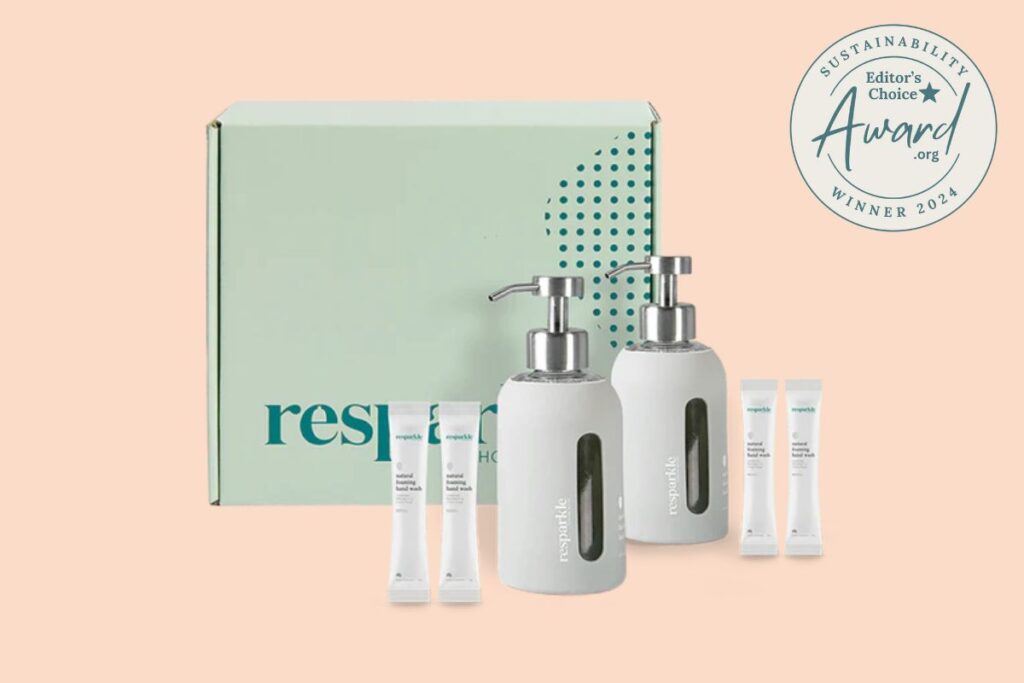
- Just-add water powder refill sachets – cleaning and personal care products can be refilled at home by adding water to powder, for example foaming hand wash or surface spray. This is an excellent way to reduce transport carbon and plastic.
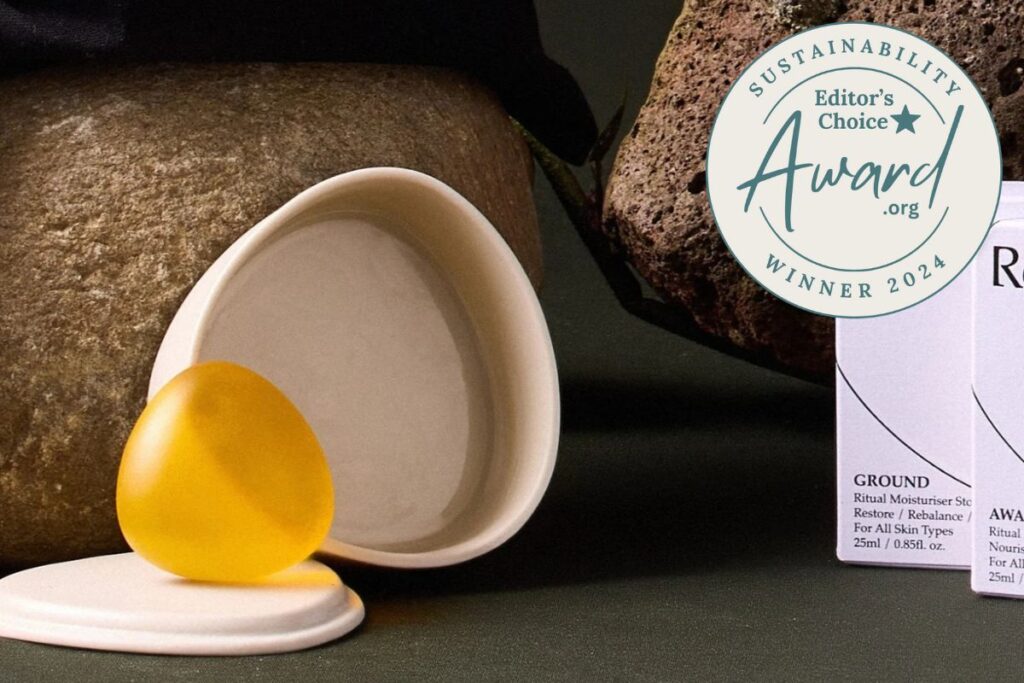
- Solid skincare like moisturiser comes in metal tins or wooden ‘forever’ boxes. A replacement ‘refill’ product with no plastic packaging is bought when it runs out, and kept in the same plastic-free container.
- Makeup – Pressed powder makeup like eyeshadows or blushers can be refilled when the packaging has a space for the new “refill” product to slot into, to avoid plastic waste. For example, eyeshadow with a wooden case and metal-encased refill.
Why Refills are Sustainable:
- Reduction of single-use packaging: By reusing durable containers, the demand for single-use plastic packaging decreases significantly.
- Lower carbon footprint: Manufacturing refill pouches, sachets, cartridges or bottles often requires less energy and materials to produce than producing entirely new products.
- Reduced carbon from transportation – shipping is also more lightweight on many refill choices, especially waterless formulas like powders.
Examples:
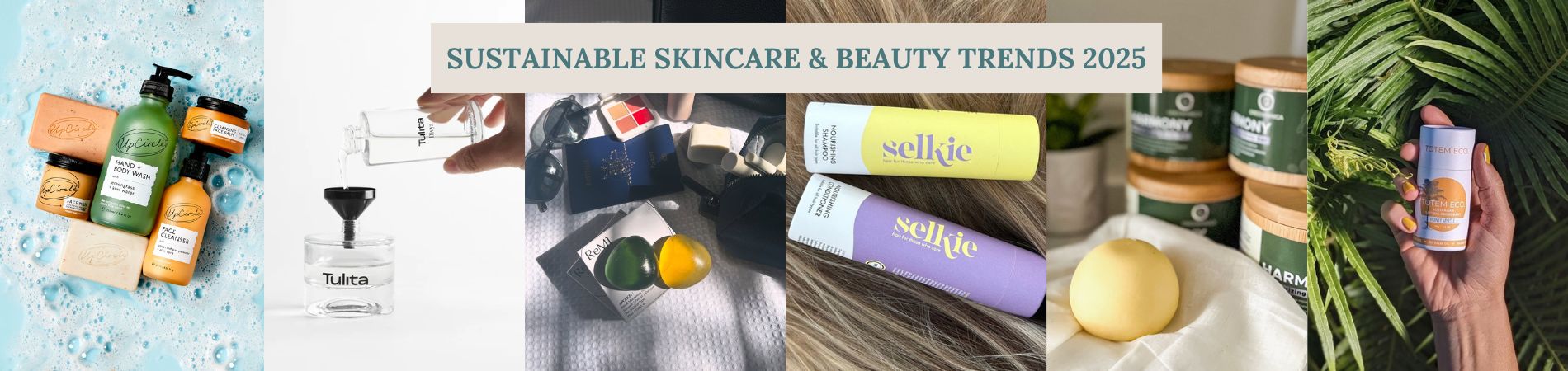
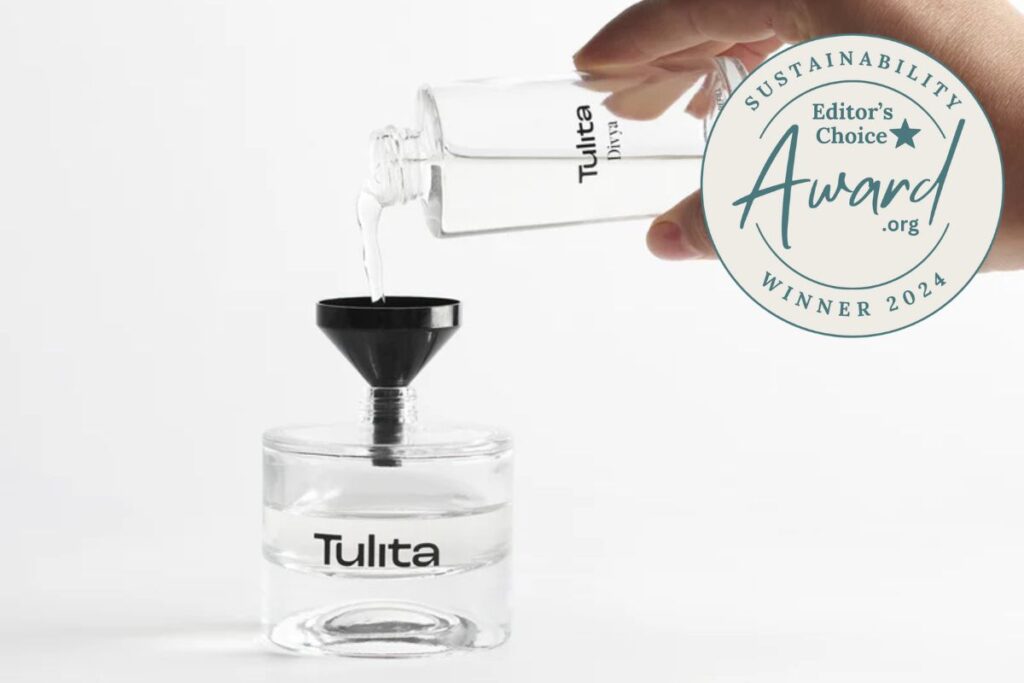
- Tulita Evolutionary Fragrance based in Australia provides perfume refills packaged in glass bottles.
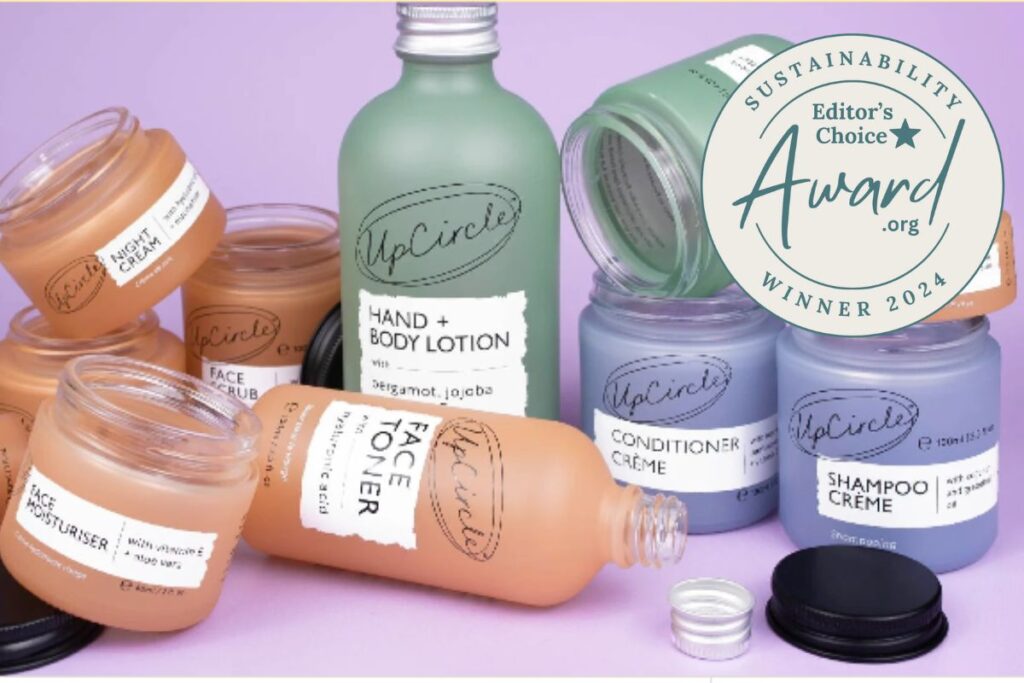
- UK-based skincare brand UpCircle provides a return and refill system for its glass and aluminium packaged skincare products.
2. Solid, Water-Free Products
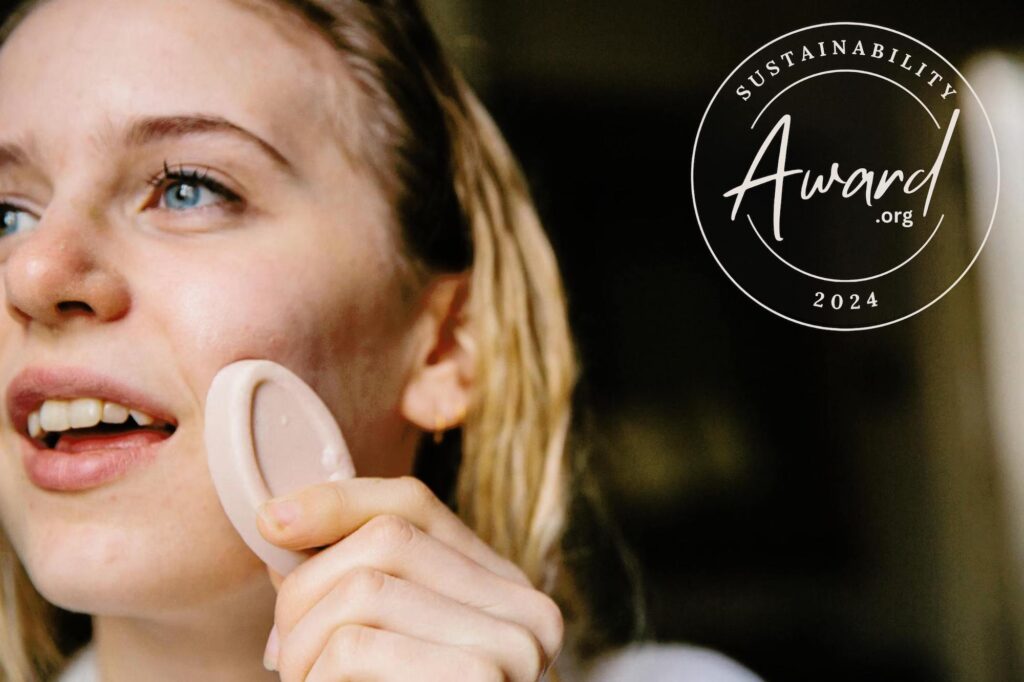
Solid beauty products, such as bar cleansers, shampoo bars, and solid moisturizers, are gaining traction as a sustainable alternative to traditional liquid formulations.
Why They’re Sustainable:
- Water conservation: Traditional skincare products are often composed of up to 80% water. Solid products eliminate this need, conserving a precious resource.
- Lightweight and compact: Without water, these products are lighter and require less packaging, reducing shipping emissions.
Examples:
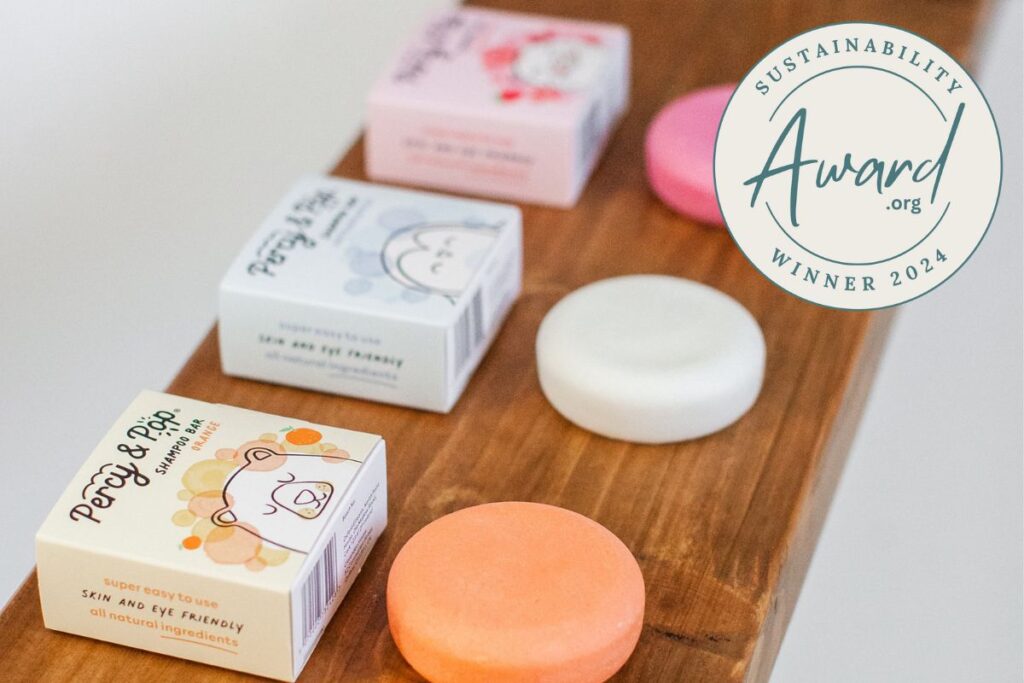
- Percy and Pop in Ireland make solid kids shampoo bars
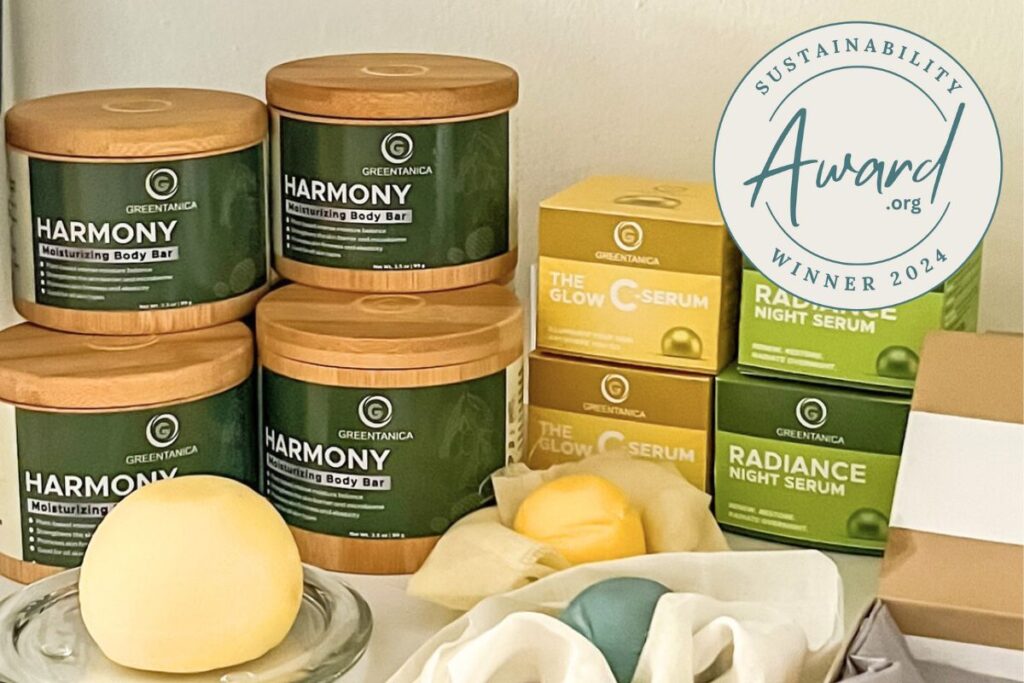
- Skincare brands like ReMi Beauty in Australia and Greentanica in the USA offer refillable solid skincare with non-plastic cases that are kept and refilled.
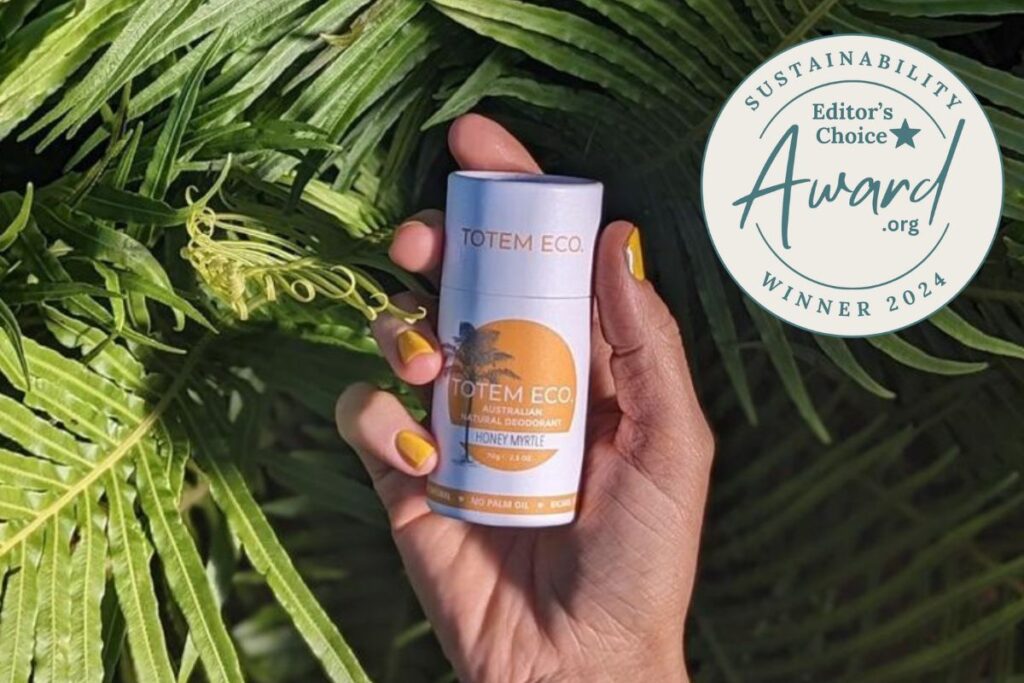
- Aussie Deodorant brand Totem Eco provide natural, solid deodorants in cardboard push-up tubes, avoiding plastic
3. Dissolvable Powder-Based Products
Dissolvable powders are an innovative approach to skincare, allowing users to mix their products at home with water or other liquids. From cleansers to masks, these products reduce the need for preservatives and bulky packaging.
Why They’re Sustainable:
- Plastic-Free Packaging: Powders are often sold in biodegradable sachets or reusable containers.
- Reduced Shipping Impact: Lightweight powders are more efficient to transport, leading to lower carbon emissions.
Examples:
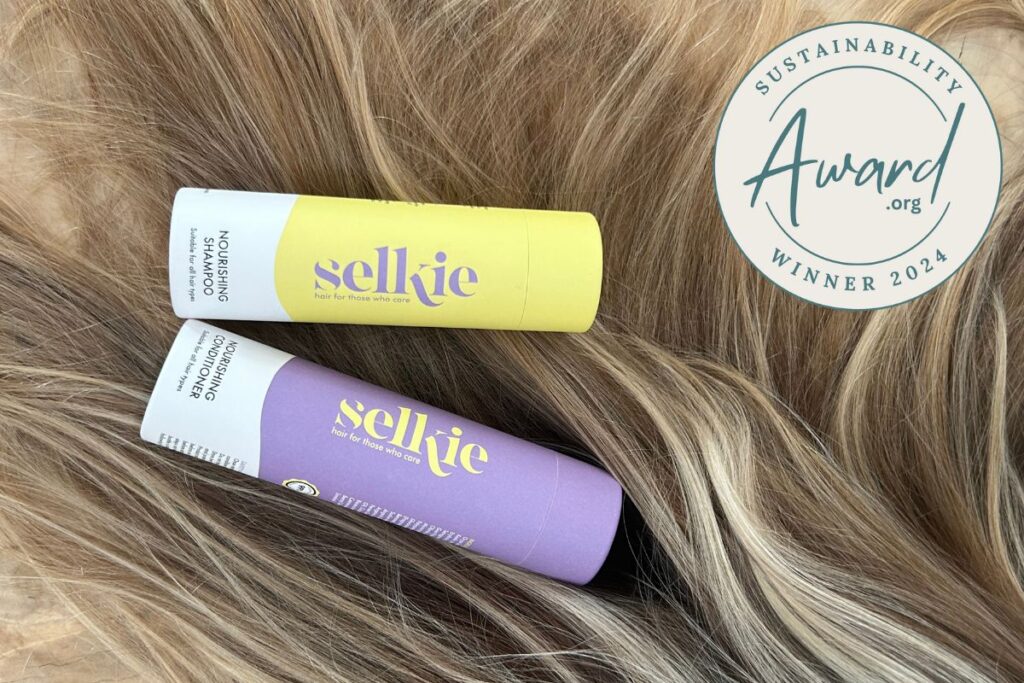
- Refillable Shampoo brand Selkie in the UK provide powder refills
- ReSparkle in Australia have a powder-based foaming hand wash
4. Plastic Reduction
The reduction of plastic use is a cornerstone of sustainability in the beauty industry. From biodegradable materials to innovative new packaging alternatives, brands are exploring ways to minimize their environmental footprint.
Why it’s important:
- Reduced Pollution: Alternatives to traditional plastics help combat the growing issue of plastics and microplastics in the environment.
- Avoiding waste: Circular products that are entirely compostable can avoid waste entirely.
Examples:
- Croatian-based Sapoon shampoos are solid and packaged in cardboard, avoiding plastic waste entirely.
- Lush has long championed solid bath and beauty products that have no plastic packaging.
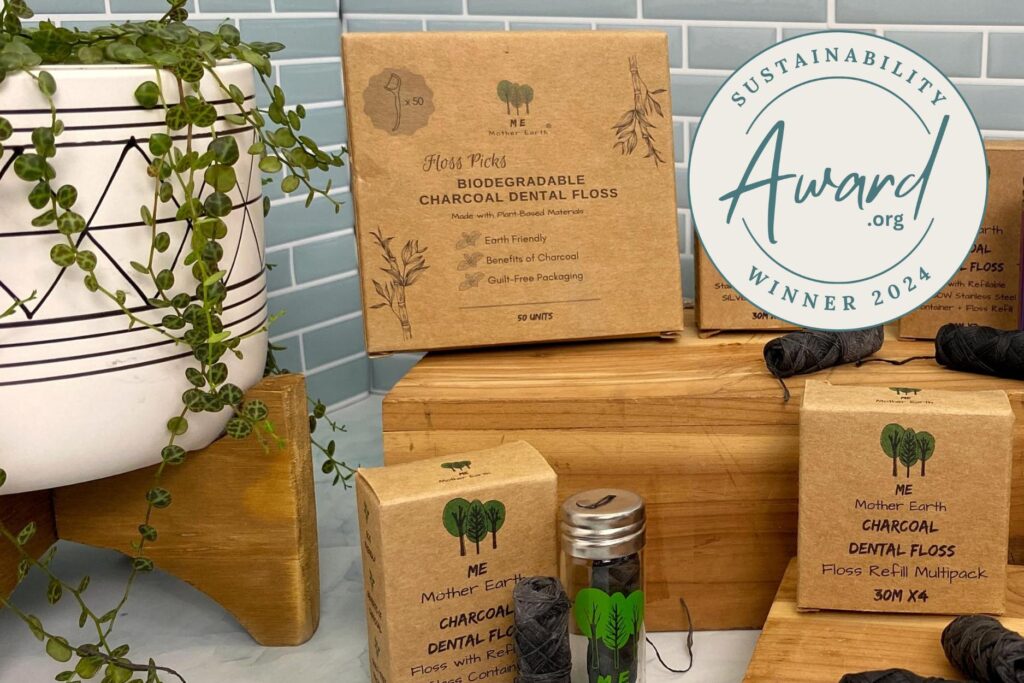
- USA-based Me Mother Earth provides zero-plastic-waste options for everyday personal care products like dental floss.
5. Upcycled Ingredients
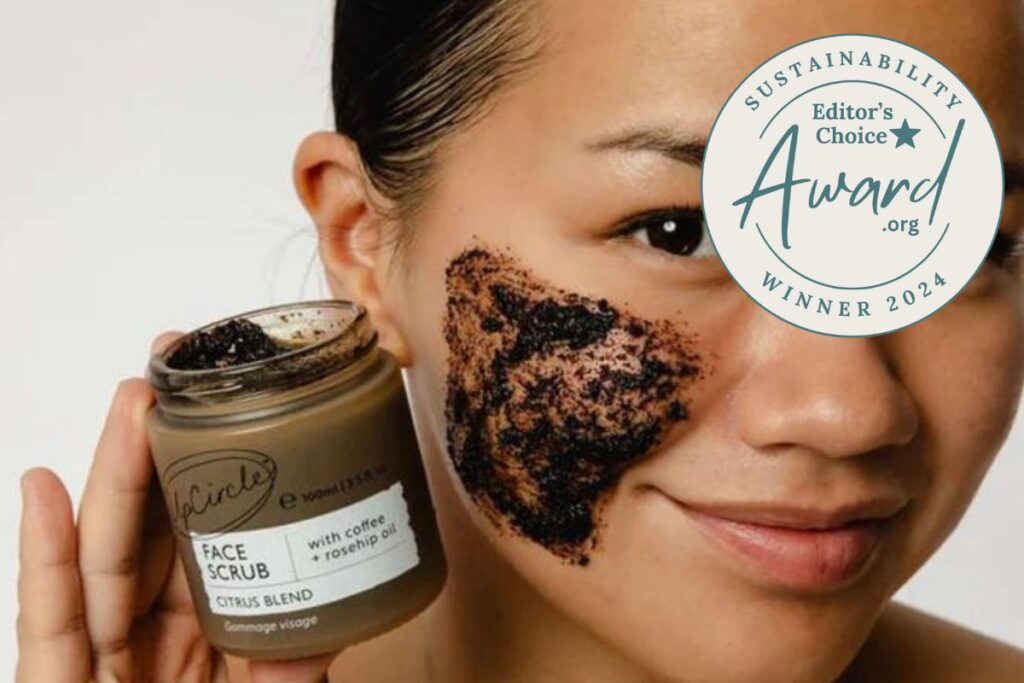
Brands are increasingly incorporating upcycled ingredients—by-products from other industries—into their formulations. For example, coffee grounds can be repurposed for exfoliants, and fruit peels can be transformed into essential oils.
How upcycled ingredients are help the planet:
- Minimizes waste: Gives new life to ingredients that would otherwise be discarded.
- Lower environmental impact: Reduces demand for newly sourced ingredients.
Examples:
- UpCircle use reclaimed coffee grounds in their face scrubs.
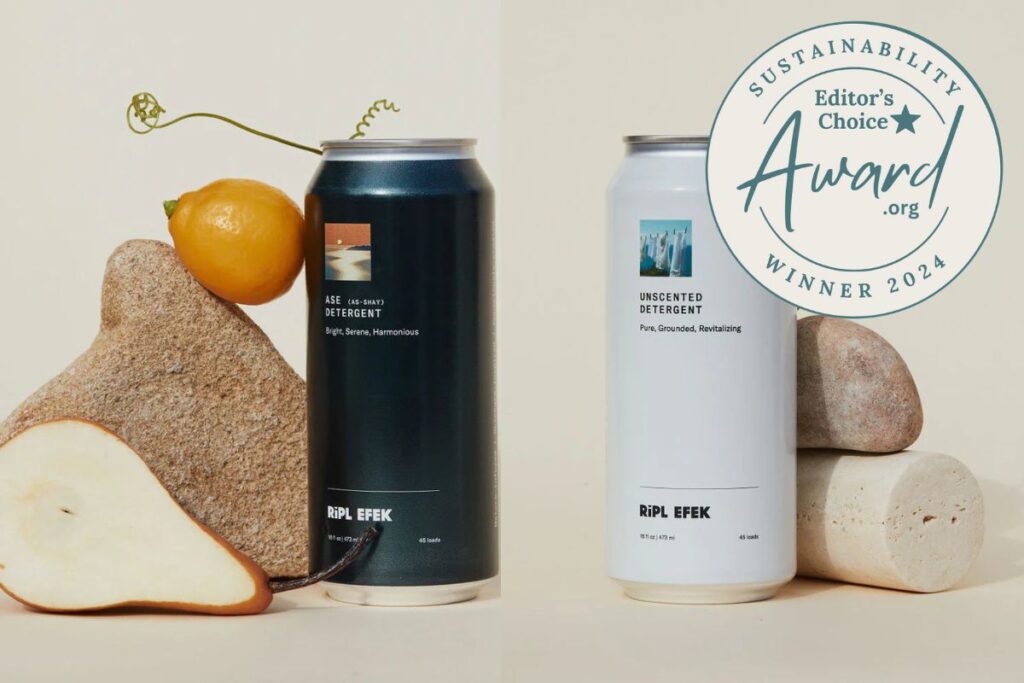
- Ripl Efek incorporates upcycled ingredients into their skin-friendly laundry products.
6. Biodegradable and Compostable Materials
Packaging made from mushroom-based mycelium or seaweed offers fully compostable solutions, breaking down naturally without harming the environment.
Why biodegradable and compostable materials are sustainable:
- Zero waste: Fully decomposes without polluting the environment.
- Toxin-free: Avoids harmful chemicals associated with some biodegradable plastics.
Examples:
- Percy & Pop kid’s shampoo bars are made from biodegradable ingredients.
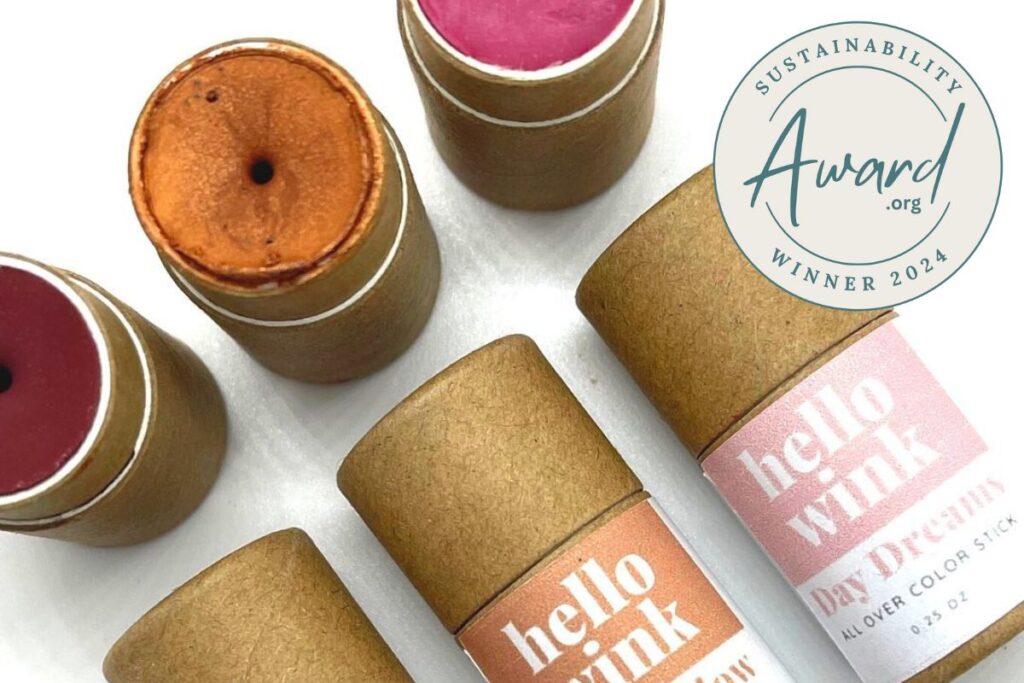
- Hello Wink packages its makeup in compostable and biodegradable cardboard and paper.
7. Carbon-MITIGATION Initiatives
Leading companies are committing to carbon-neutral production processes, ensuring their operations leave no trace on the planet.
How carbon mitigation helps the environment:
- Reduces climate impact: Helps combat global warming.
- Encourages renewable energy: Supports sustainable production.
Examples:
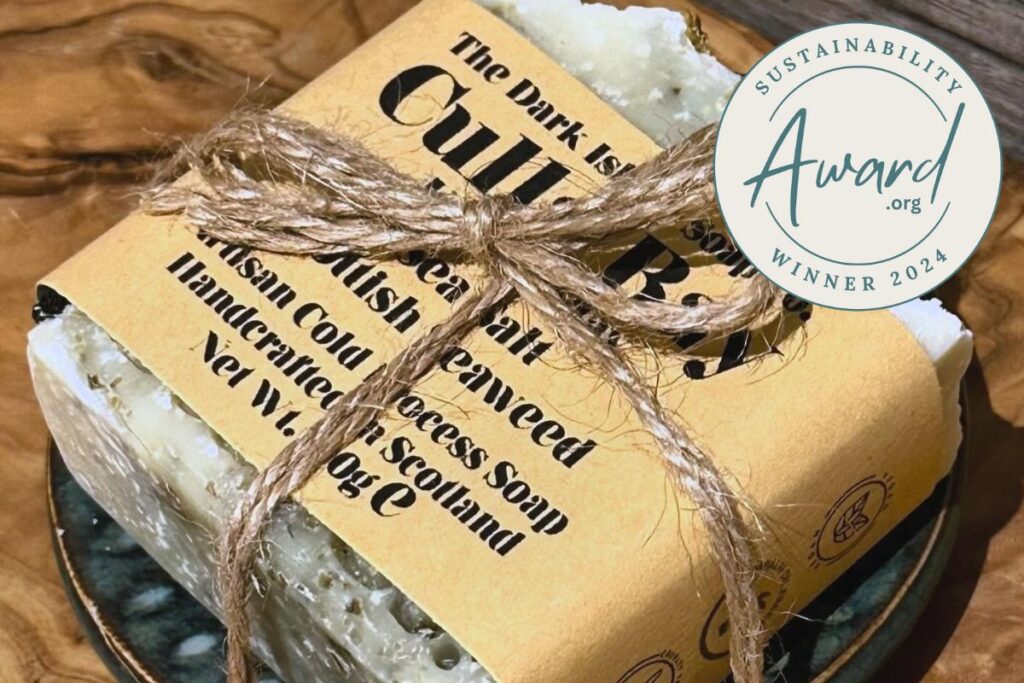
- Dark Island Soap Co plants trees for every order to offset carbon emissions.
- Greentanica use carbon neutral delivery for their solid skincare products
8. Localized Sourcing
Using locally sourced ingredients reduces transportation emissions and supports local economies.
Why It’s Sustainable:
- Lower carbon footprint: Fewer transportation emissions.
- Supports local economies: Strengthens local sustainable businesses
Examples:
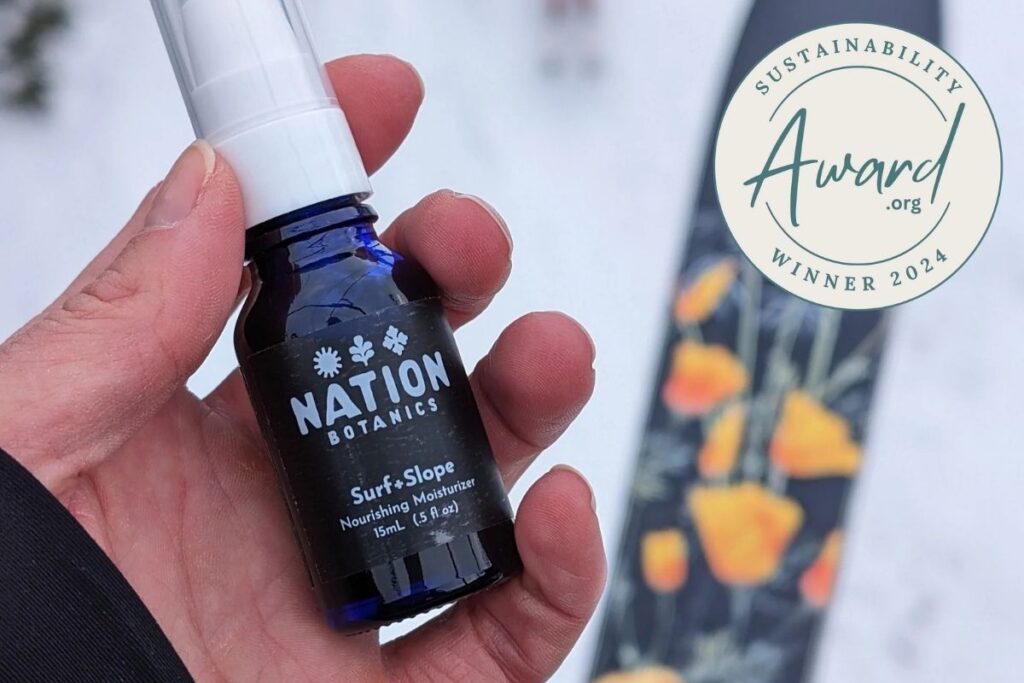
- Nation Botanics sources local, sustainable ingredients.
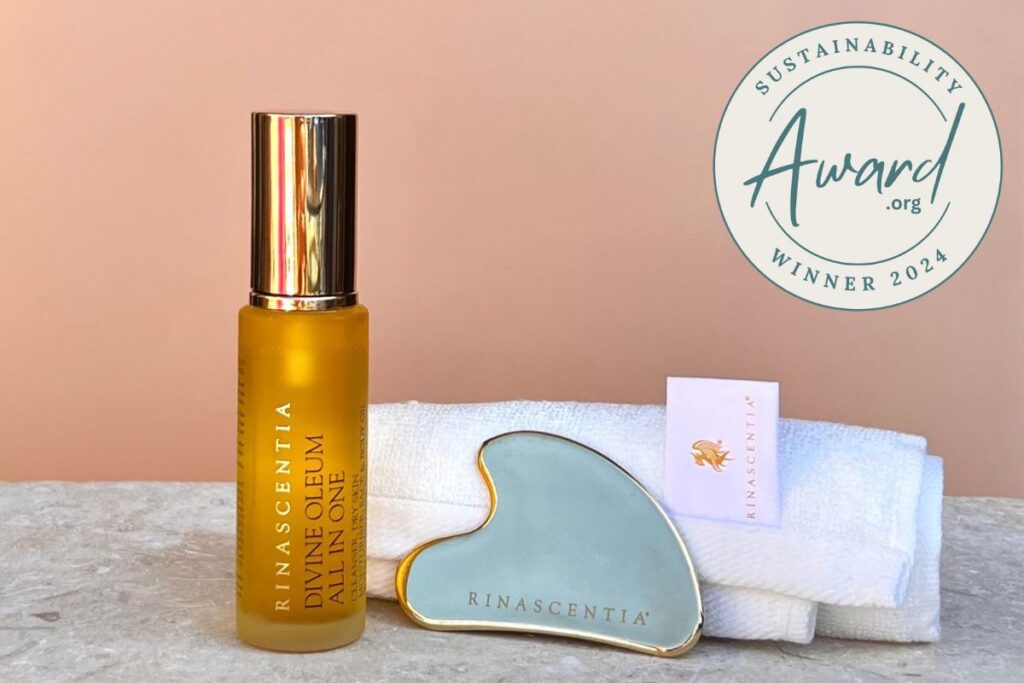
- Rinascentia integrates regionally grown botanicals into its skincare products.
ECO solutions work better combined
The demand from consumers for environmentally friendly products is expected to propel the skincare and cosmetics sector to adopt this new generation of sustainable innovations in 2025. In order to make an even greater impact, these innovations—which range from refill systems and water-free goods to upcycled materials and biodegradable packaging—are now increasingly being combined.
Customers can more easily find efficient and sustainable skincare and beauty choices and the numbers of brands embracing the most sustainable skincare and beauty trends increases.
JOIN THE SUSTAINABLE BEAUTY MOVEMENT
Sustainable skincare and beauty trends are shaping the future of the industry. By choosing eco-friendly products, you’re not just making a better choice for your skin—you’re making a positive impact on the planet.
Want to support brands that are leading in sustainability?
- Explore award-winning sustainable beauty brands
- Make conscious choices with plastic-free, upcycled, and carbon-neutral products
- Reduce waste while enjoying high-performance skincare
Be part of the change! Start your journey towards sustainable beauty today.
Check out our 2024 Sustainability Award Winners
Discover the best eco-friendly brands!
Keep up with sustainable Skincare and Beauty Trends
Follow us on Instagram to keep up with the latest Sustainable Skincare and Beauty Trends. Sustainability Award Instagram.
